Ultimate Drivers Canada
A driving school that taught a generation was losing students to its own software. I led the redesign, and the hardest part wasn't the screens. It was the room.
EdTech
Digital Transformation
Role
Senior Product Designer
Timeline
6 months
team
10 Backend Engineers, 5 Frontend Engineers, 2 PM, Me, 1 Junior and Senior Product Designer
platform
Web, Mobile App
The brief looked simple. It wasn't.
A driving school for 16-to-21-year-olds had a learning platform that students openly disliked. Confusing navigation, static content, no sense of progress, and a quiet dropout problem underneath all of it. The ask sounded routine: redesign the student platform, make it modern, make it engaging.
The complication showed up in the first stakeholder conversation. The client didn't want modern. They wanted simpler, and to them simpler meant less of everything a 2024 product person would reach for. So I was handed two requirements that pointed in opposite directions: build something engaging enough to keep teenagers motivated, and build something plain enough that a cautious, non-technical stakeholder would sign off on it. Most of this project lived in the gap between those two sentences.
Three modules, one fragile journey
A student on a curb at 7 AM with no idea if her instructor was coming, or if the lesson even existed. An instructor who lost his logbook, again. An admin queue full of "your call is important to us."
Behind all three sat the same systemic problem. The legacy platform was never designed for multiple roles or for phones, so every role had built workarounds, and the workarounds had become the system.
Research: the dropout wasn't about driving
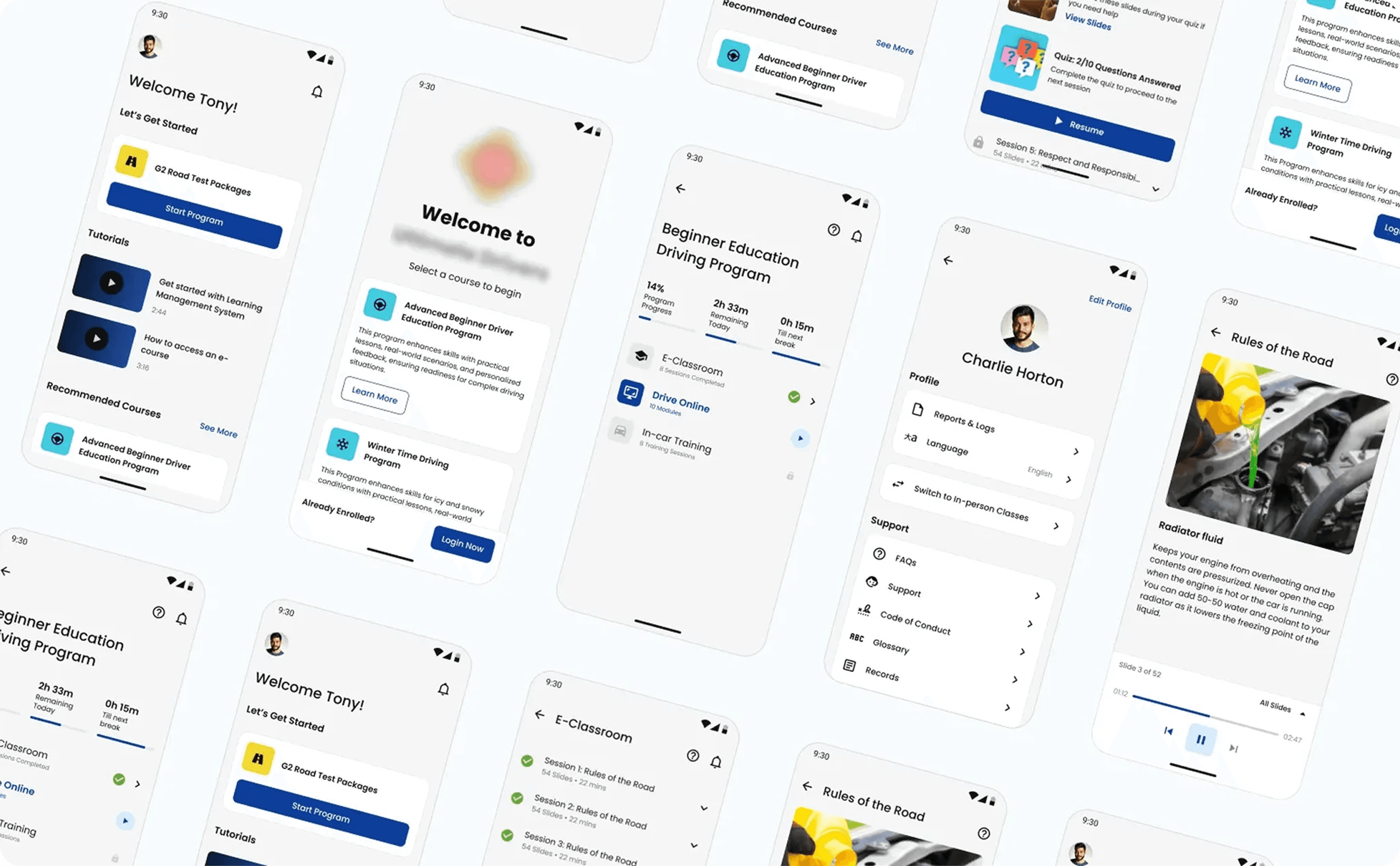
A native app for instructors with tap-to-log notes, progress dashboards and auto-generated feedback, built for the two minutes between lessons in a parked car. Syncing in real time so HQ sees updates instantly instead of at day's end.
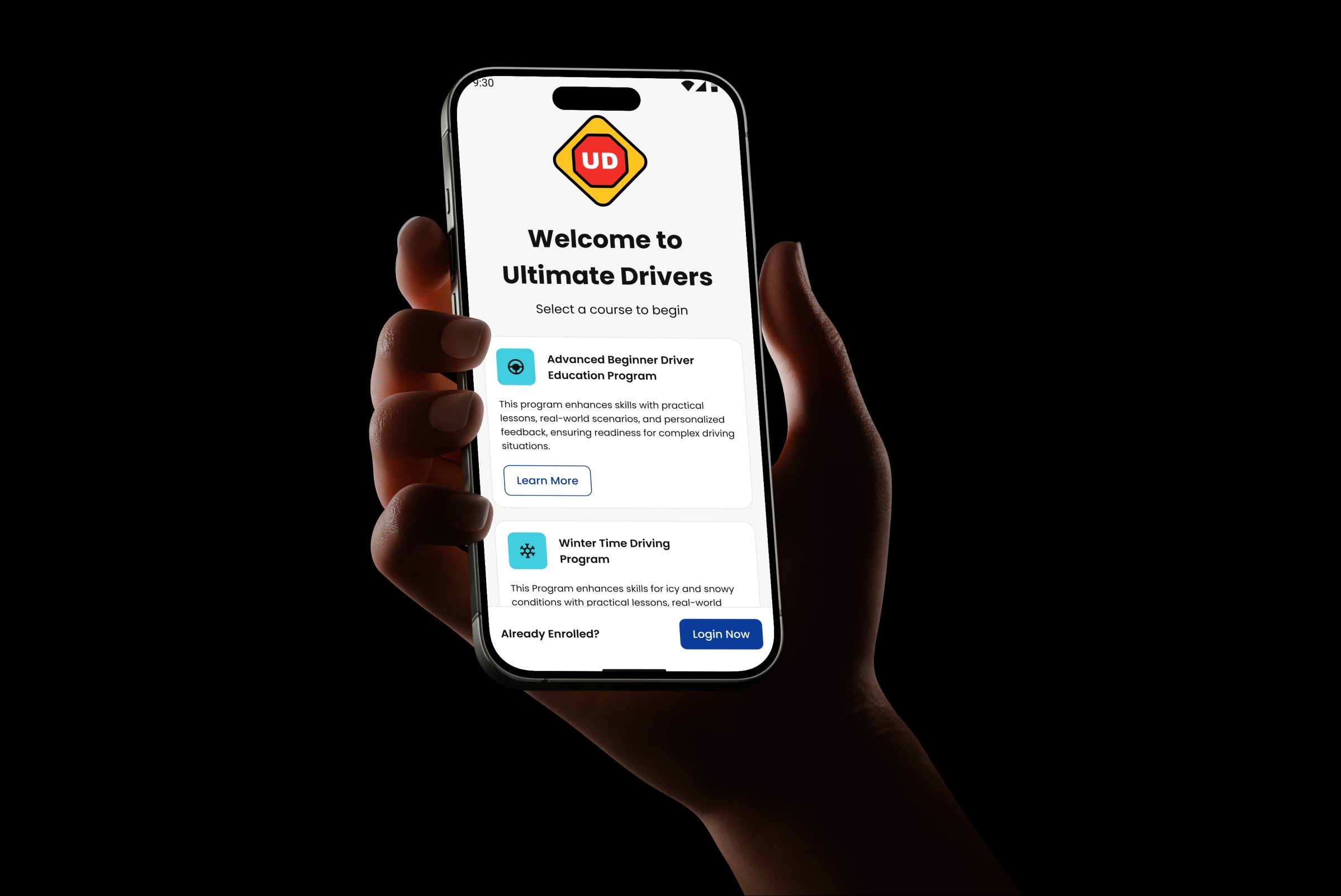
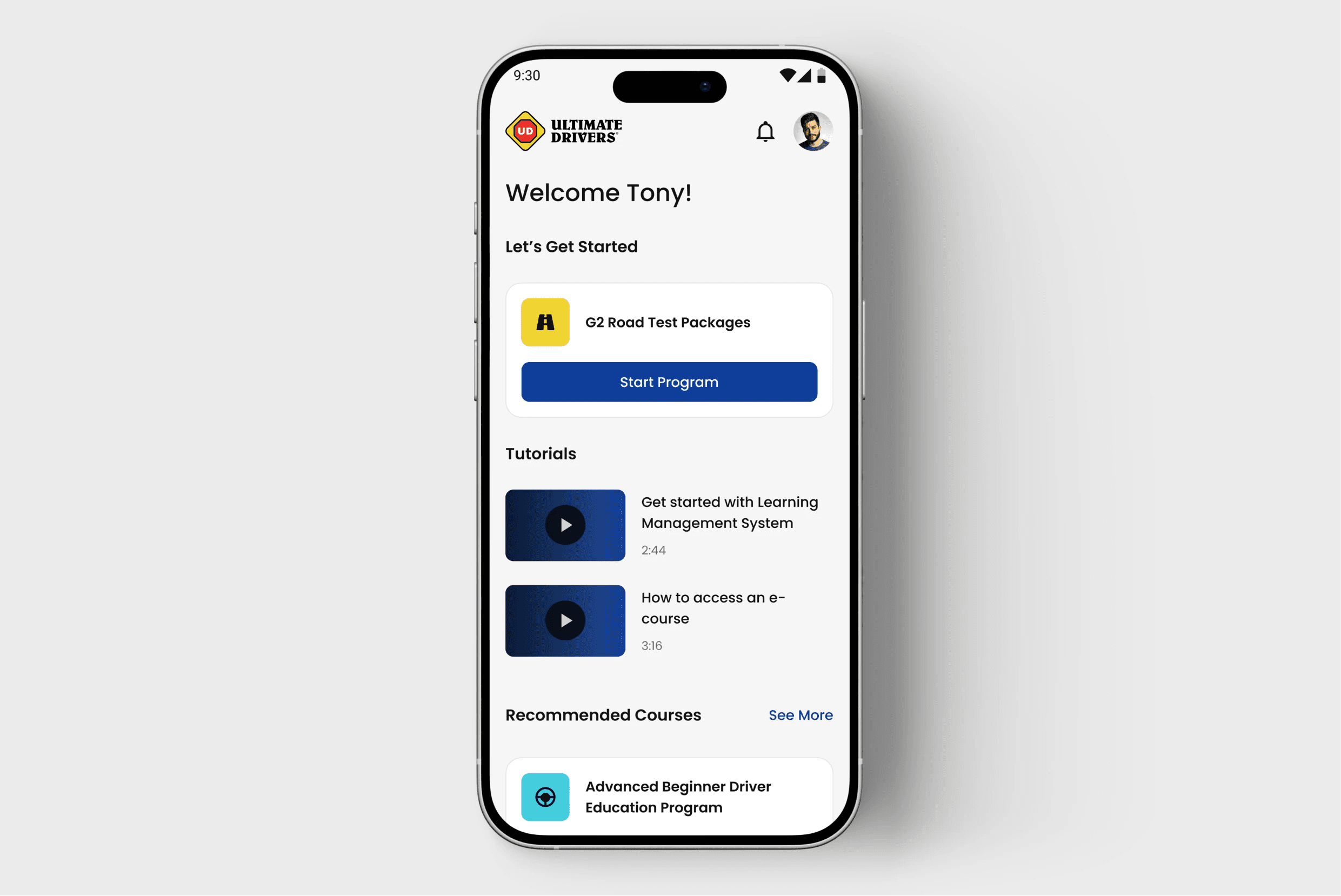
A mobile student portal where you book in-car or online classes, get a live ETA on your instructor, and can see exactly how close you are to certification. Nudges handle the rebooking before the dropout happens.
One admin control panel replacing the spreadsheets, emails and PDFs. Instructors, batches, progress and exam eligibility in one place, with automatic flags for at-risk students and schedule conflicts.
And a rebuilt website with city-wise pages, testimonials, maps and clear CTAs, which lifted online signups 18% in pilot cities before the rest had even shipped.
The room was the hard part
Here is the part I'm proudest of, and it has nothing to do with a screen.
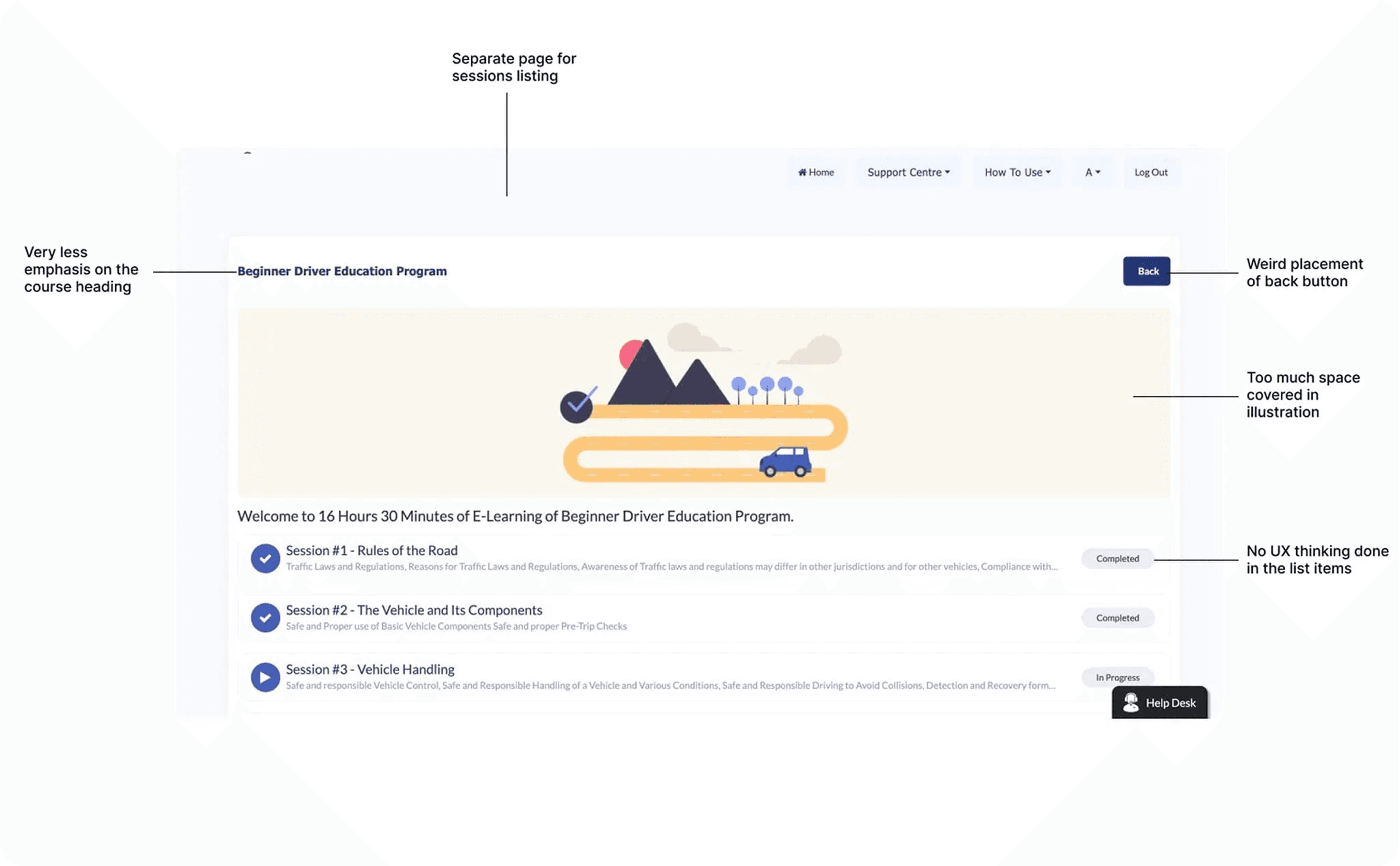
We brought mid-fidelity work that leaned modern and interactive, because the motivation research demanded it. The stakeholders pushed back. They wanted it simpler, less modern, closer to what they already recognized. A junior version of me complies, ships the plainer thing, and watches the dropout stay exactly where it is.
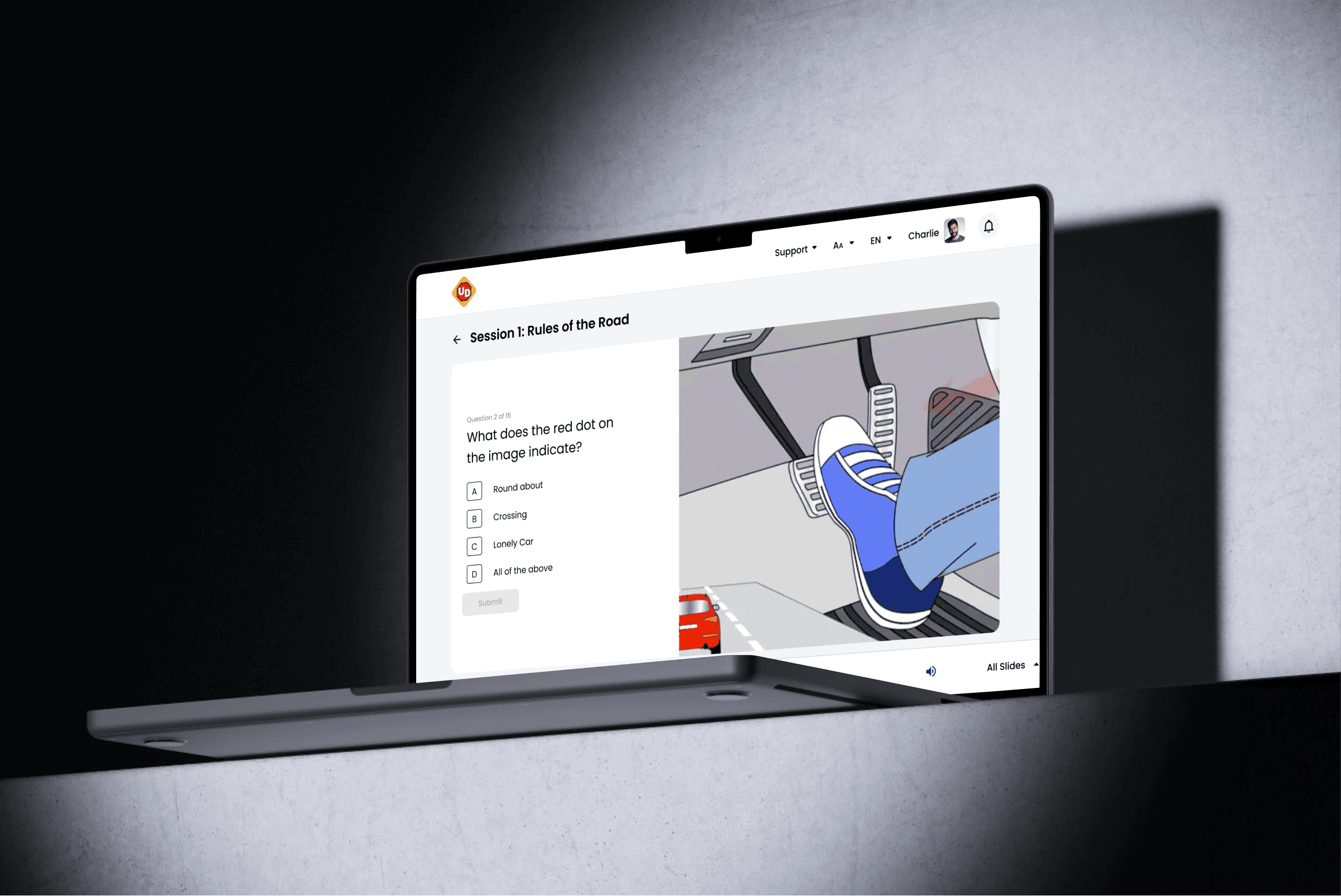
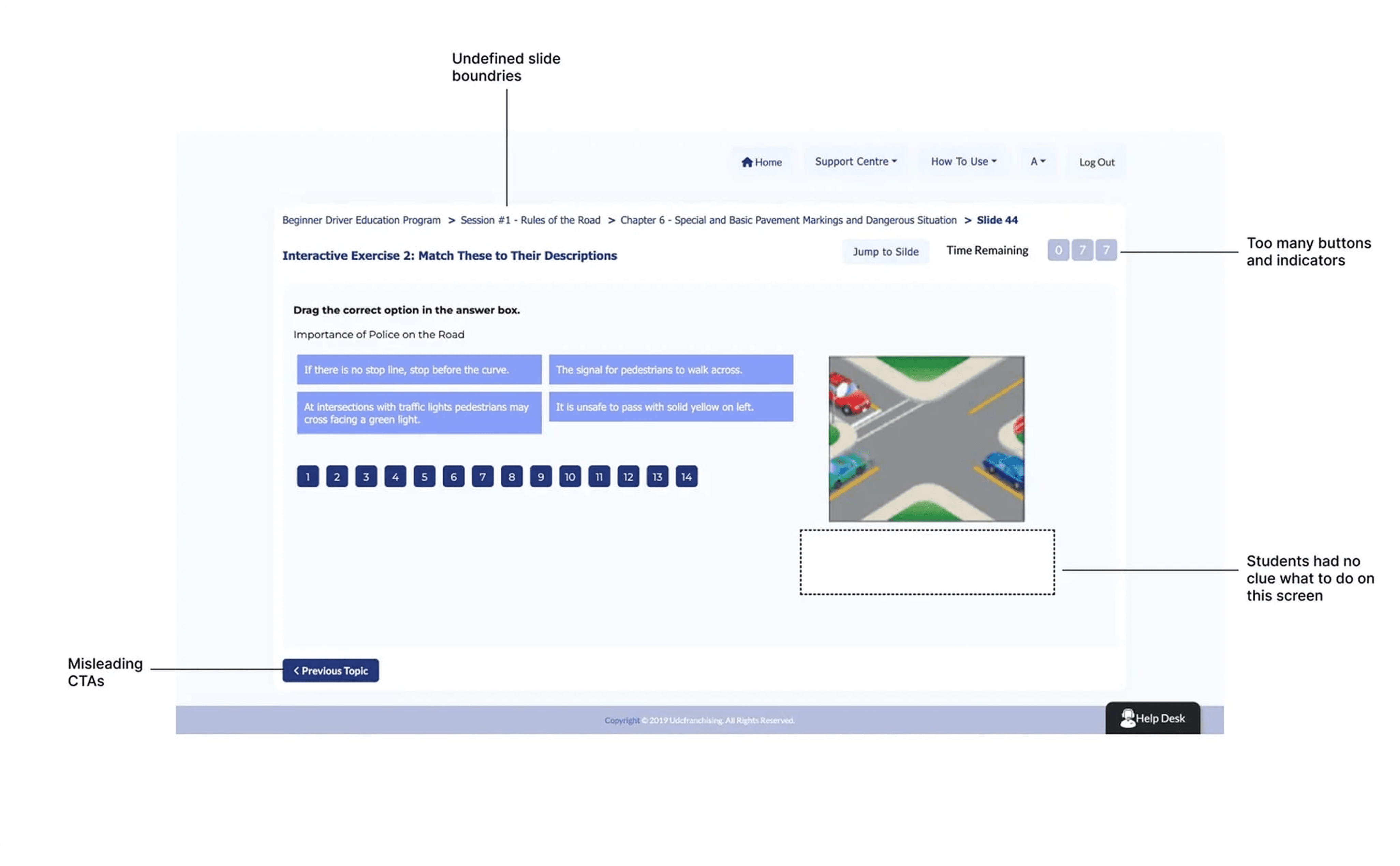
Instead I had to do the actual work of design leadership, which is changing minds. I separated two words the client was using as one: simple and plain. Simple is a quiz that tells you instantly an answer was wrong, shows time remaining, shows questions attempted, so you always know where you stand. Plain is a static page that respects nobody's time. We could give them simple without giving them plain. That distinction, argued across several rounds of feedback, is why the engaging version survived contact with a cautious client instead of getting value-engineered into the thing they already had.

What I owned
I led design on this. That meant I ran the research and the stakeholder interviews, held the client relationship and the requirements, set the design direction, defined what success would be measured by, and mentored the designer executing the screens day to day through critique. He did strong work inside the direction we set. My job was the decisions around that work: what we built, what we cut, and how we got a nervous client to say yes to the right things.
I want to name that split plainly, because a case study that hides the team is a case study nobody believes. This was a collaboration. The leadership calls were mine.
What changed
Booking success went from 57% to 72%. That's the number I can stand behind, measured, and I'd rather show one real figure than a wall of soft ones.
The deeper wins don't all fit in a percentage. A student could finally see their progress and feel the course was worth finishing. An instructor ran their whole multi-city day, schedules, overrides, lessons, tests, from one app instead of paper and phone calls. And the business got something it never had: a real-time, audit-ready record of what actually happened, captured at the moment it happened, by the people who were there. The paper didn't get digitized. It got replaced by proof.

What I learned
Two things I now carry into every project.
First, clients rarely argue about design. They argue about words. "Simple" was doing all the damage here because two rooms meant two different things by it, and my job wasn't to win that fight, it was to dissolve it.
Second, in any system that touches money, compliance, or safety, the real design lives in the states most portfolios never show, the error, the guard, the proof. Anyone can design the happy path. Leading this taught me that the trustworthy product and the beautiful product are decided in the same place: the screen where something could go wrong, and doesn't.
Design partner on execution: Yash Acharya. Some specifics held back under NDA.