Royal Enfield Motorsports
Making a legacy brand's design system feel like 140 km/h without breaking a single token.
Automotive
Design Systems
Role
Senior Product Designer
Timeline
16 weeks
team
05 Backend Engineers, 2 Frontend Engineers, 1 PM, Me, 1 Junior Product Designer
platform
Web, Mweb

The brief
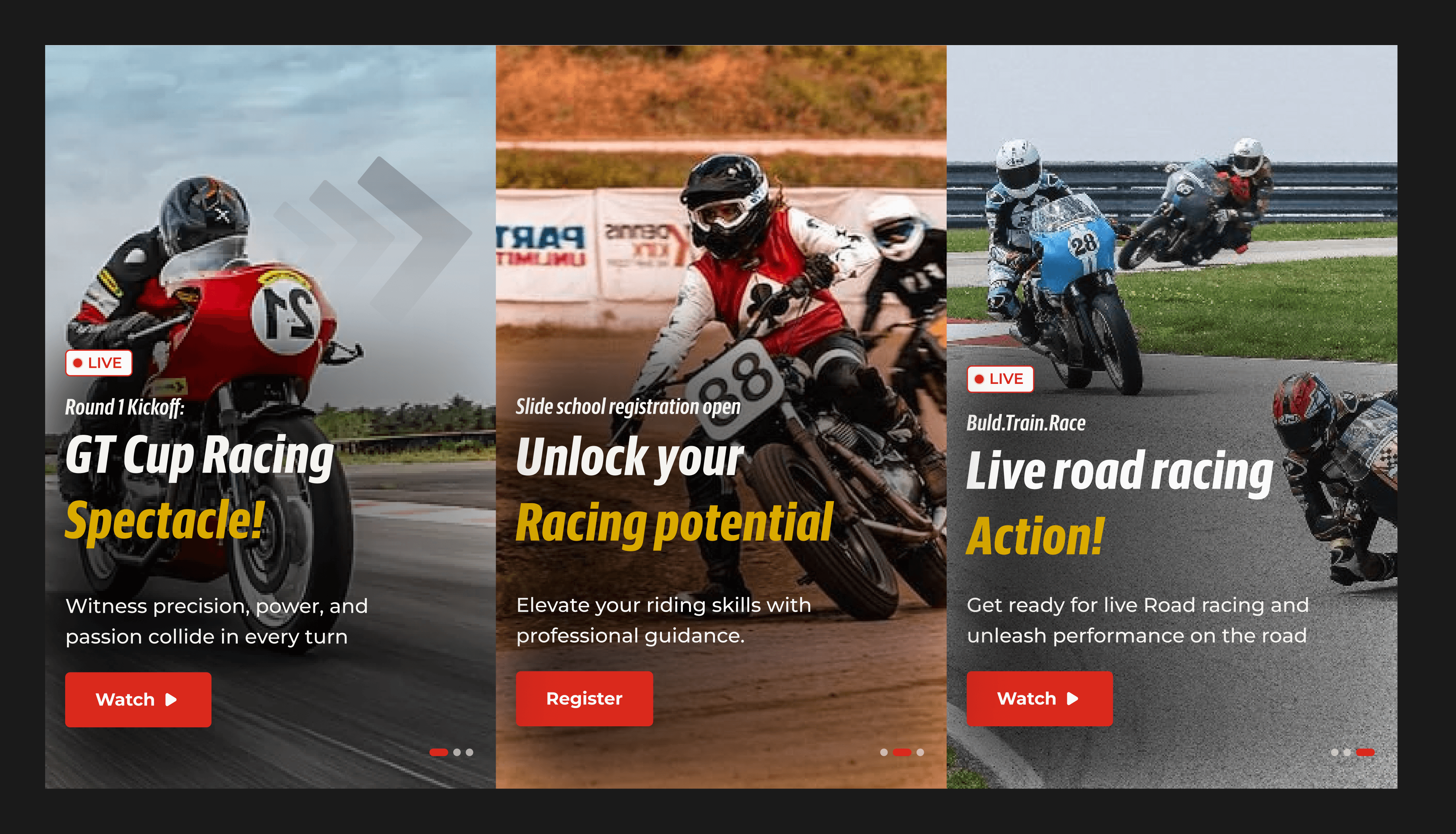
Royal Enfield's Motorsports division is where the brand goes fast. Track, dust, community, legacy. The ask was a dedicated web and mobile experience that carries that energy without stepping outside one of India's most protected brand languages.
Nobody asked for shiny UI. The ask was an identity that feels fast, lives rugged, and speaks to racers and fans and the wider RE culture at the same time.
System versus soul
Then the contradiction showed up. Brand said don't break the system. Motorsports demanded something that didn't feel like the rest of the site. Those two sentences split the team for a stretch of the sprint. Bend the grid? Extend the type scale? Introduce motion the system never specified? VERIFY, optional but valuable: one sentence about the actual crit or argument where this broke open.
Extend, don't break
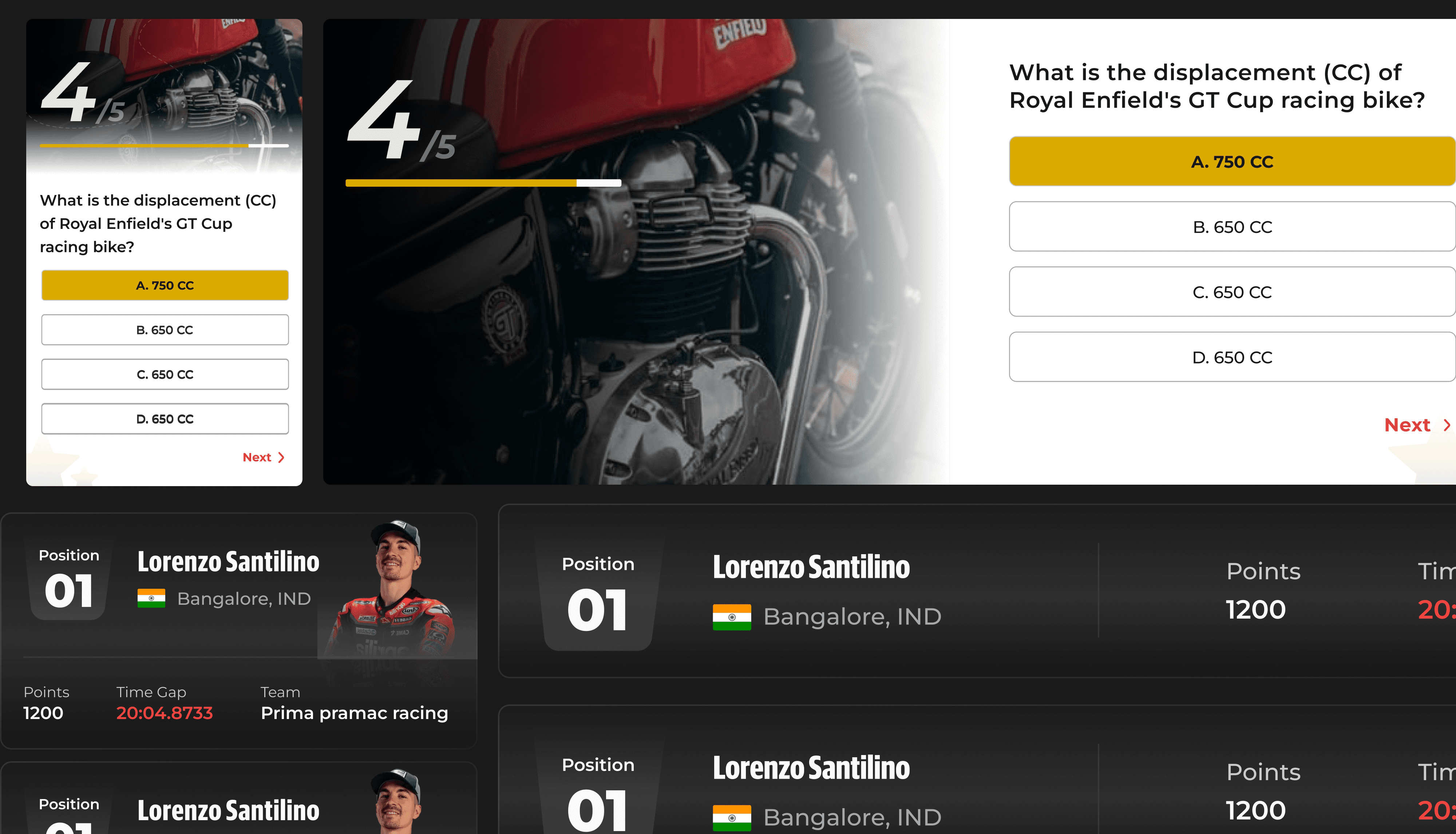
The way through was to stop treating the system as a wall and treat it as a base layer. We built a dedicated Motorsports library on top of it. Micro-component variants that live inside RE's tokens but run bolder and more fluid. Motion, transitions and responsive gestures, carrying the feeling of speed without anything engineering would refuse to build.
Once that existed, the work got fast. Mobile and desktop stopped drifting apart. The system gave us rhythm instead of friction.
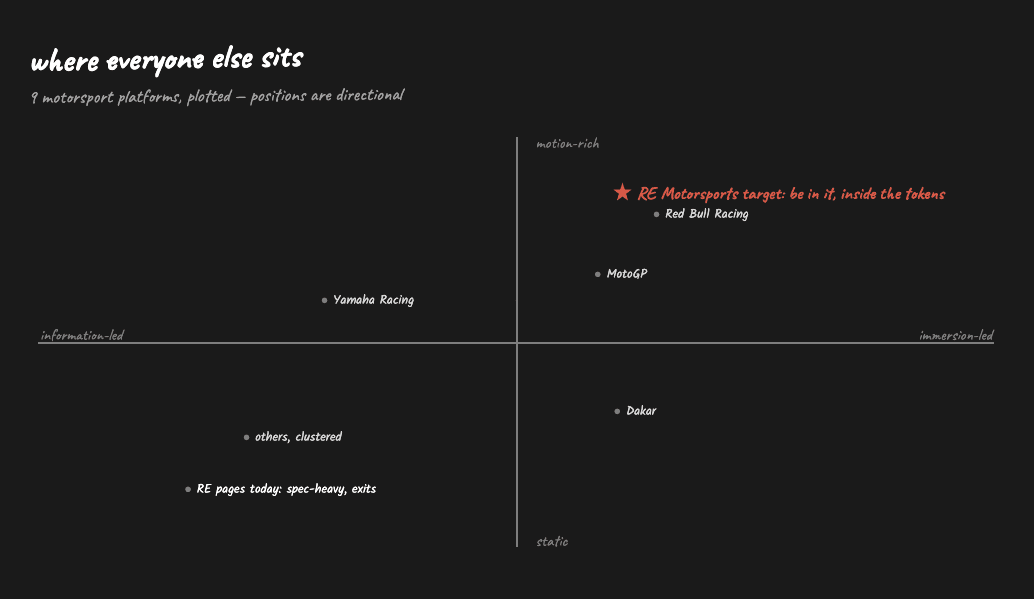
Prototypes that behaved like the thing they sold
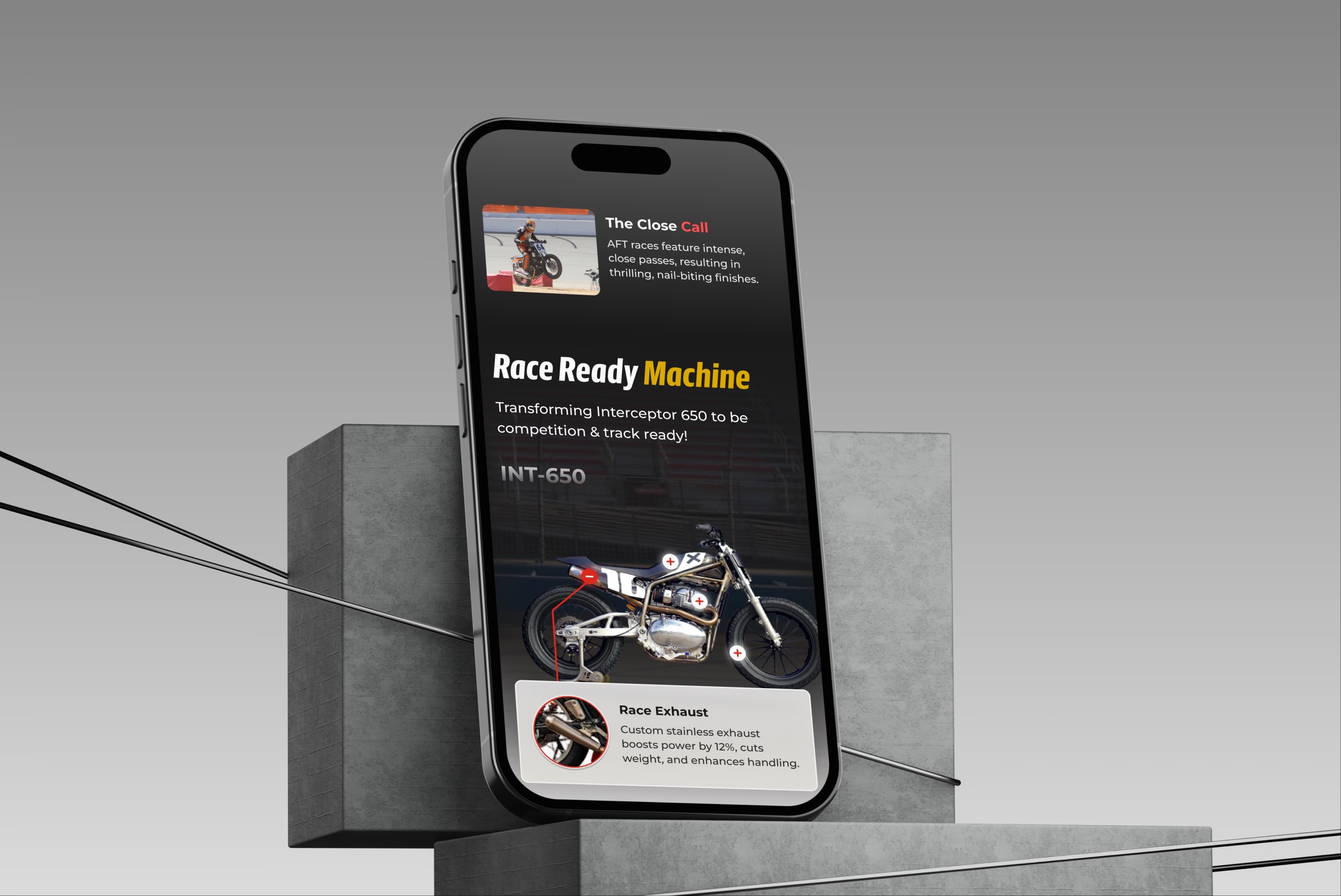
The prototypes were built to feel like gear shifts. A scroll that moves like a lap. Race schedules wired in. Spec pages rebuilt mobile-first for the people who genuinely love specs. And a media-heavy community section, because that's what the data said people actually came for
The evidence that mattered
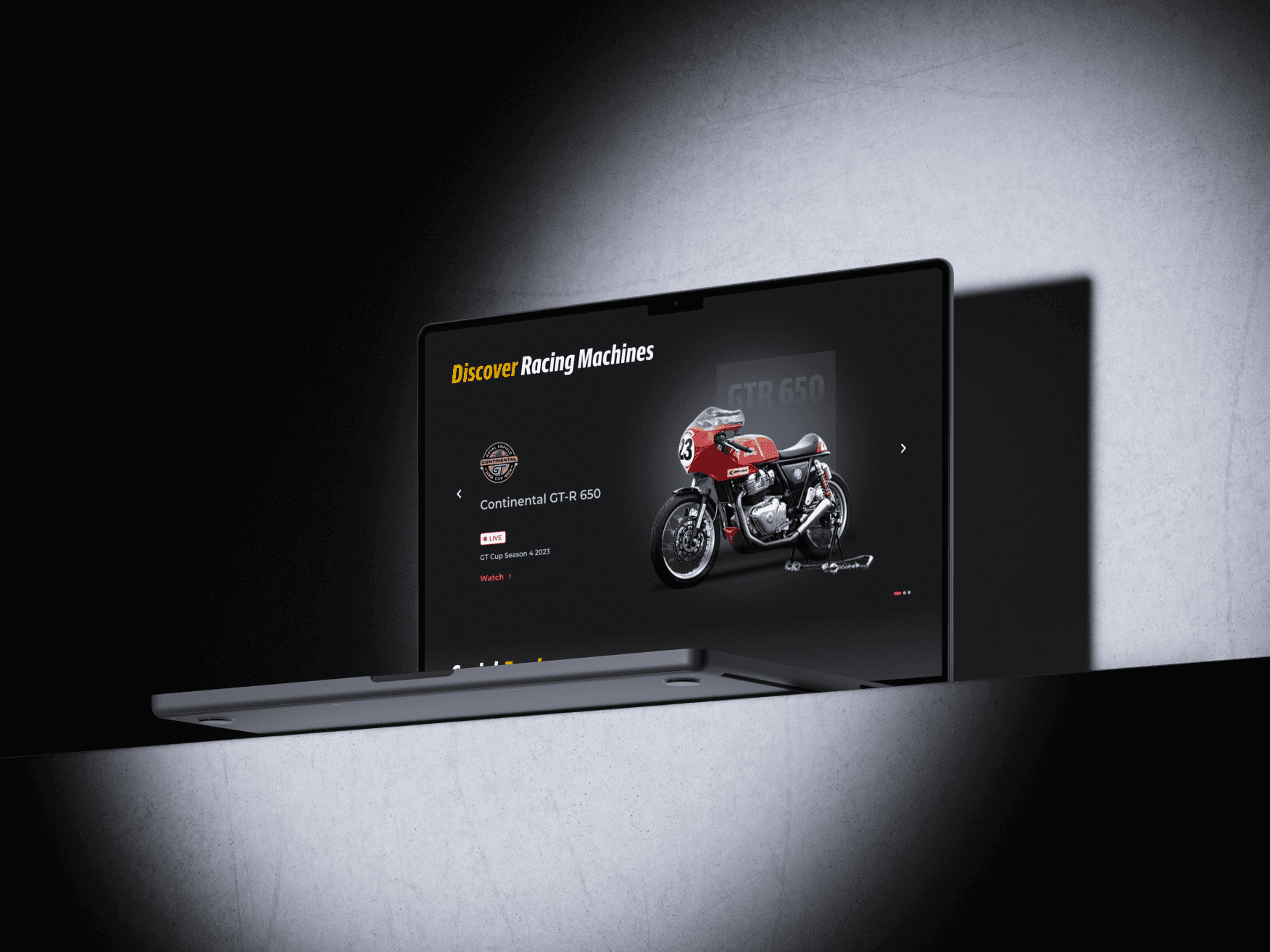
We interviewed eight riders, professional and amateur, from the RE track community. Sat with PMs and race coordinators. Tore down nine motorsport platforms, Red Bull Racing, MotoGP, Dakar, Yamaha Racing among them.
But the finding that decided things came from Hotjar and GA on the existing RE pages. Bike spec pages had brutal exit rates. People weren't there to read. Community content, rider photos, race highlights, pulled the deepest scrolls on the site.
So the north star wrote itself. Users didn't want to browse. They wanted to be in it. The dirt, the roar, the win. Not paragraphs about them.
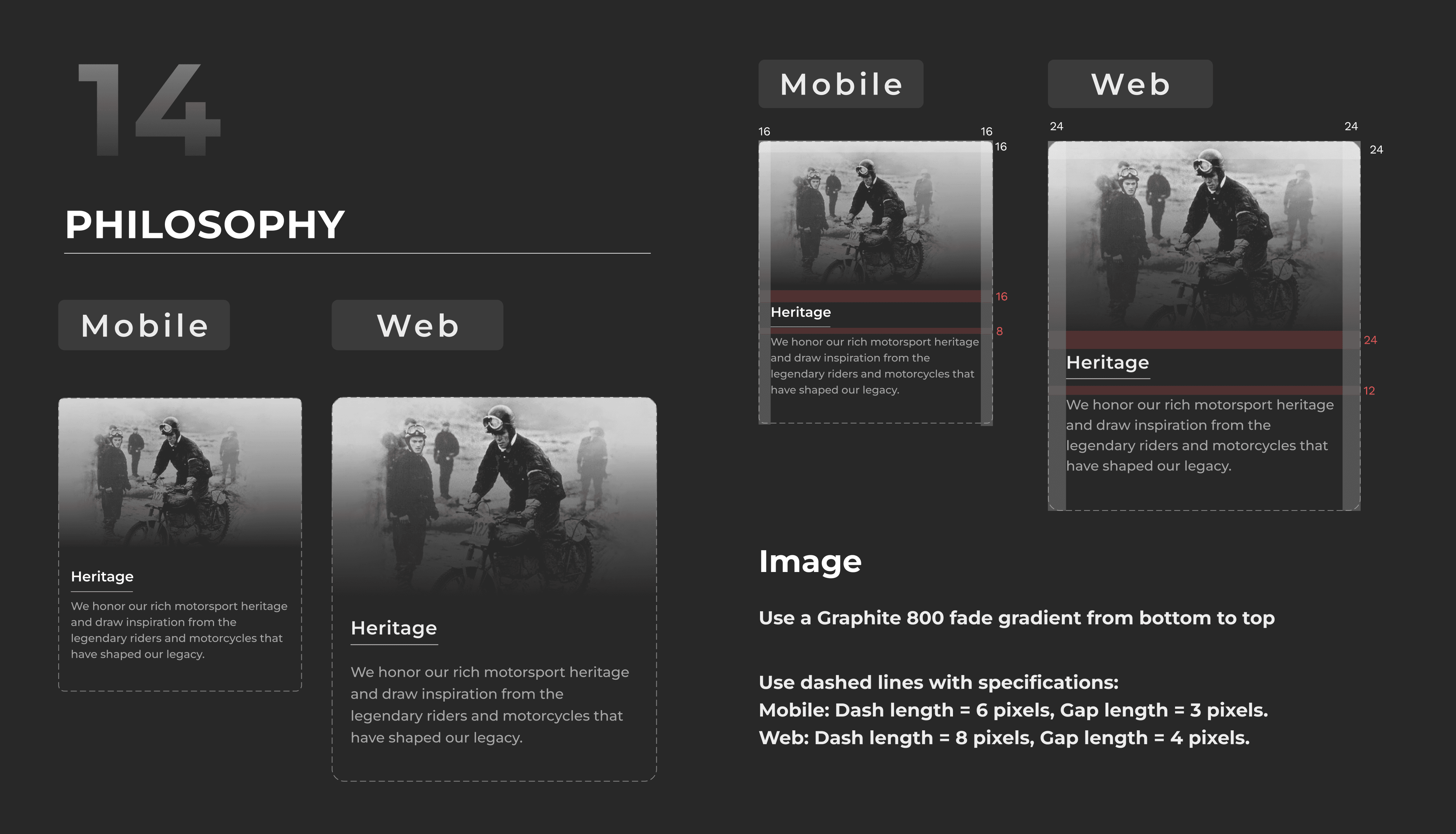
Outcome
A complete extension of the design system with a mobile-first component library. Modular layouts built to scale with whatever content Motorsports throws at them. Prototypes validated with user groups and internal stakeholders, then shipped internally.
VERIFY, and this is the honest gap in this case study: it needs one real number. Post-launch engagement, adoption of the library by other RE squads, anything. Chase your Infinite Locus contacts. Until then this closes as a craft and systems story, which is its true role in the lineup anyway
Looking back
Our first assumptions were too spec-focused. We overestimated how much technical detail people wanted up front, and the data corrected us. What worked was leading with the visual narrative.
The thing I actually learned took me a while to say plainly. The innovation on this project wasn't visual. It was the negotiation. Legacy against novelty, brand against motion. That's where the design happened.