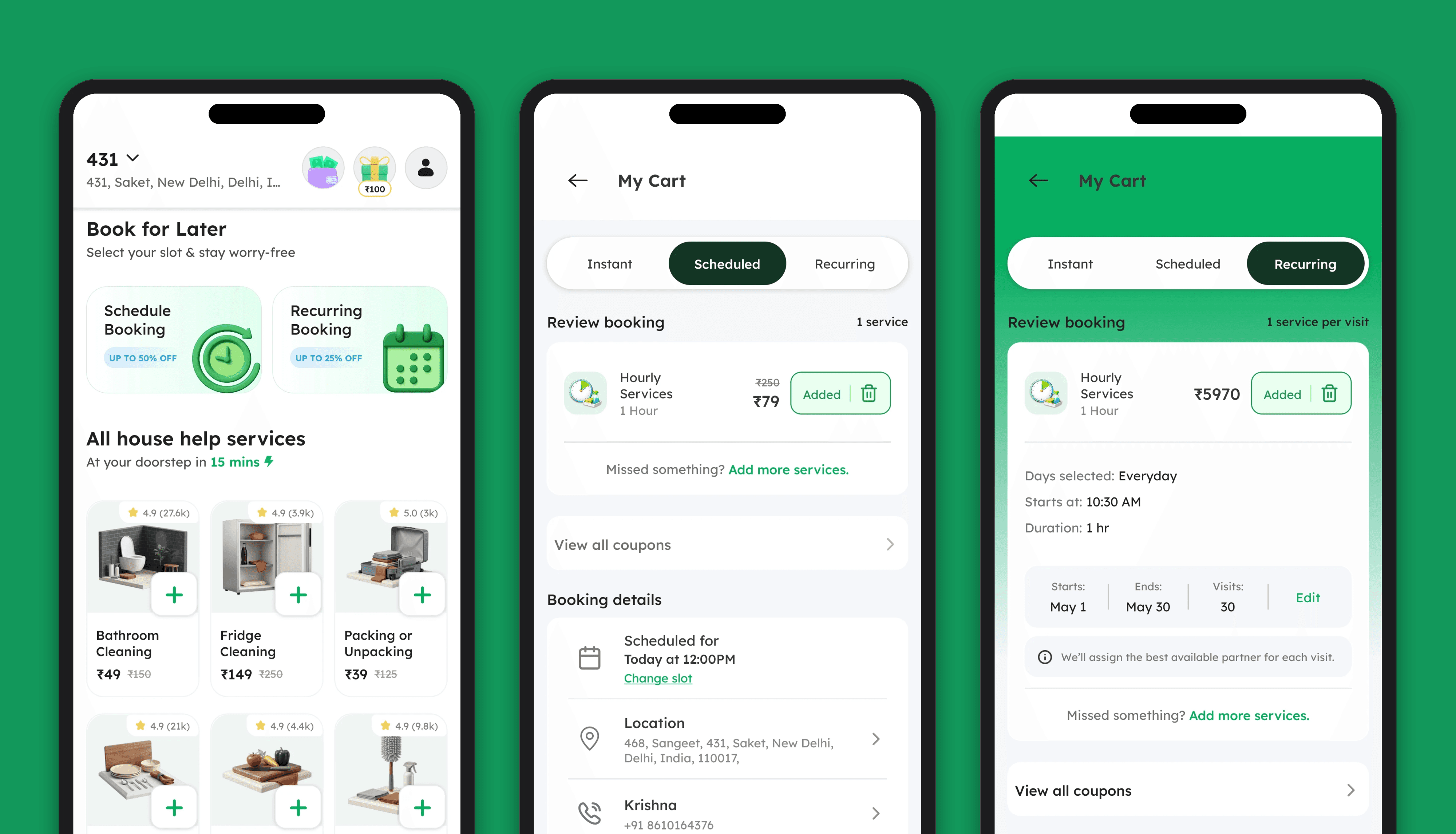
Pronto
Four weeks to design an MVP for workers who might never read it. The company is now worth around $200M.
0 to 1
Inclusive Design
Role
Design Consultant
Timeline
30 days (Crazy, right?)
team
2 Backend Engineers, 2 Frontend Engineers, 1 Founder, Me (IC Role)
platform
Mobile App
The bet nobody had placed yet
By 2024, India had taught itself to expect anything in ten minutes. Groceries from Zepto and Blinkit. Food. Medicine. Electronics. Quick commerce had trained an entire urban generation to believe that the gap between wanting something and having it should be measured in minutes, not days.
Pronto was a bet that the next thing in that ten-minute window would be a person. Not a product on a scooter, a trained worker at your door to clean, to cook, to help, in the time it takes to make tea. The same bet was forming across the category at the same moment: Snabbit was building it in Bengaluru, and Urban Company would soon launch Insta Help. Nobody had proven it worked yet. That's the project I was hired for: design the three apps the bet would run on, in four weeks, before the bet had an answer.
It's worth being honest about what that means for a case study. I was there for the first two months, the launch. So this is not a story about scale. It's a story about the hardest part of any quick-commerce business, the part the headlines skip: the first ten minutes of the first day, when you have no density, no trained supply, and no proof, and you have to design as if you have all three.
Quick commerce is retail with a stopwatch. Every element, sourcing, dispatch, last mile, has to work in perfect sync, and a single delay ripples through the entire chain.
Deciding what not to design
Four weeks, one designer, three apps. The only way through was subtraction, and on a timeline like that, the cuts are the design.
In, because they were the ten-minute event itself: booking in under thirty seconds, live dispatch the ops team could read at a glance, the worker's core task loop, and shift assignment. Out, on purpose: ratings and reviews, anything in the wallet beyond the basics, consumer personalization, every feature that mattered for the company Pronto wanted to become but not for the first order in the first hub.
The test for every feature was one question: does this block the first order in hub one? If not, it waited. Each cut was a one-line agreement with the founder, written down, so that weeks later "missing" never got mistaken for "forgotten." Anyone can add features to a roadmap. On a four-week build, deciding what the launch could survive without was the actual senior work.
The worker app, and the decision the whole company depended on
Here is where the project stopped being about speed and became about people.
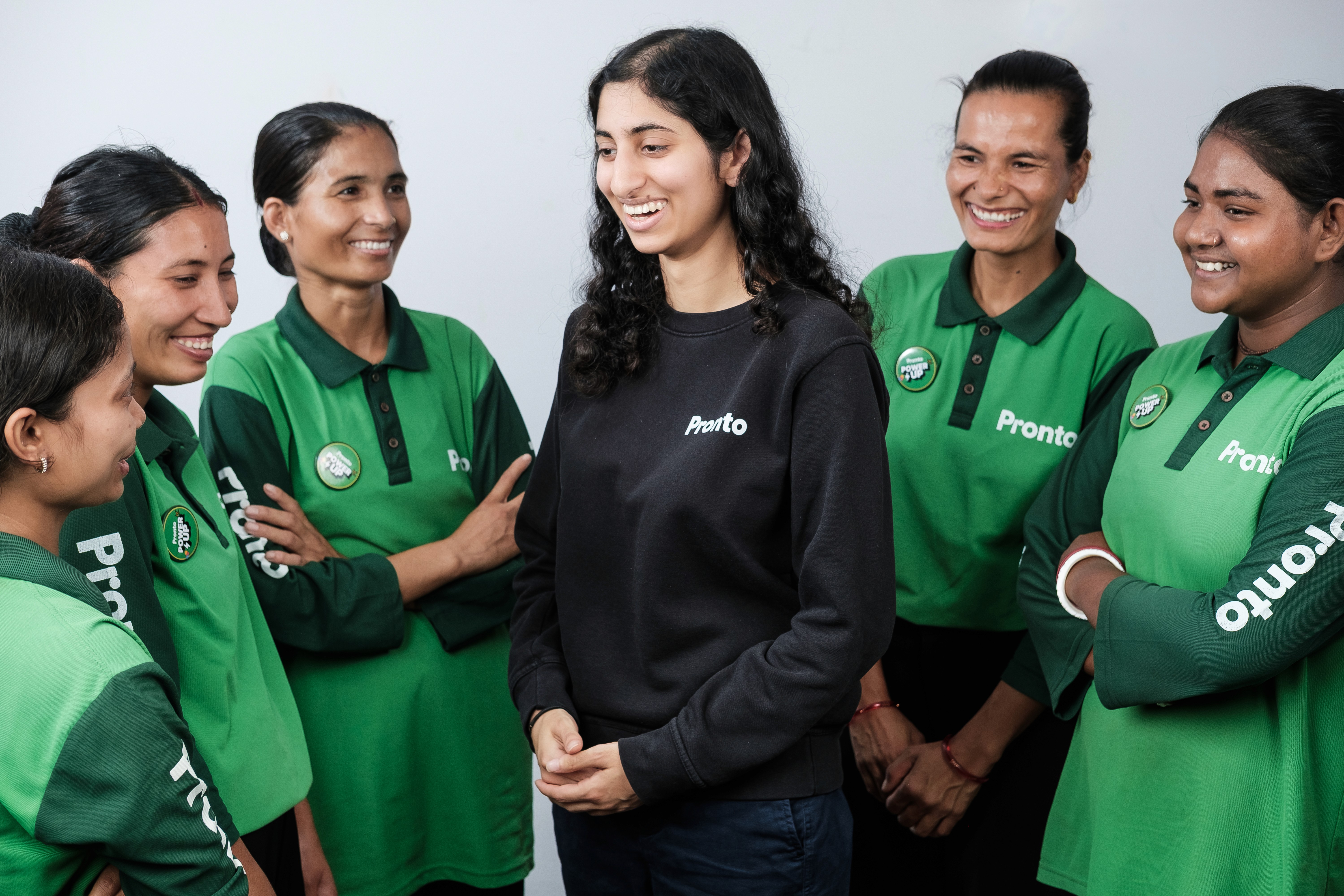
The workforce for this category is not the gig workforce you picture. Across the industry it is overwhelmingly women, many entering formal, app-based work for the first time, coming from informal domestic work or jobs like the garment factory floor. They bring deep skill at the actual work. What they don't always bring is fluency in English, or in reading dense text on a phone under time pressure, in what might be their second or third language.
A standard text-driven app would have quietly excluded the exact people the business was built on. And in this model, the worker isn't a user of the product, the worker is the product, the thing being delivered in ten minutes. So designing the worker app to be unusable by its own workforce wouldn't have been an accessibility miss. It would have broken the supply side of the company.
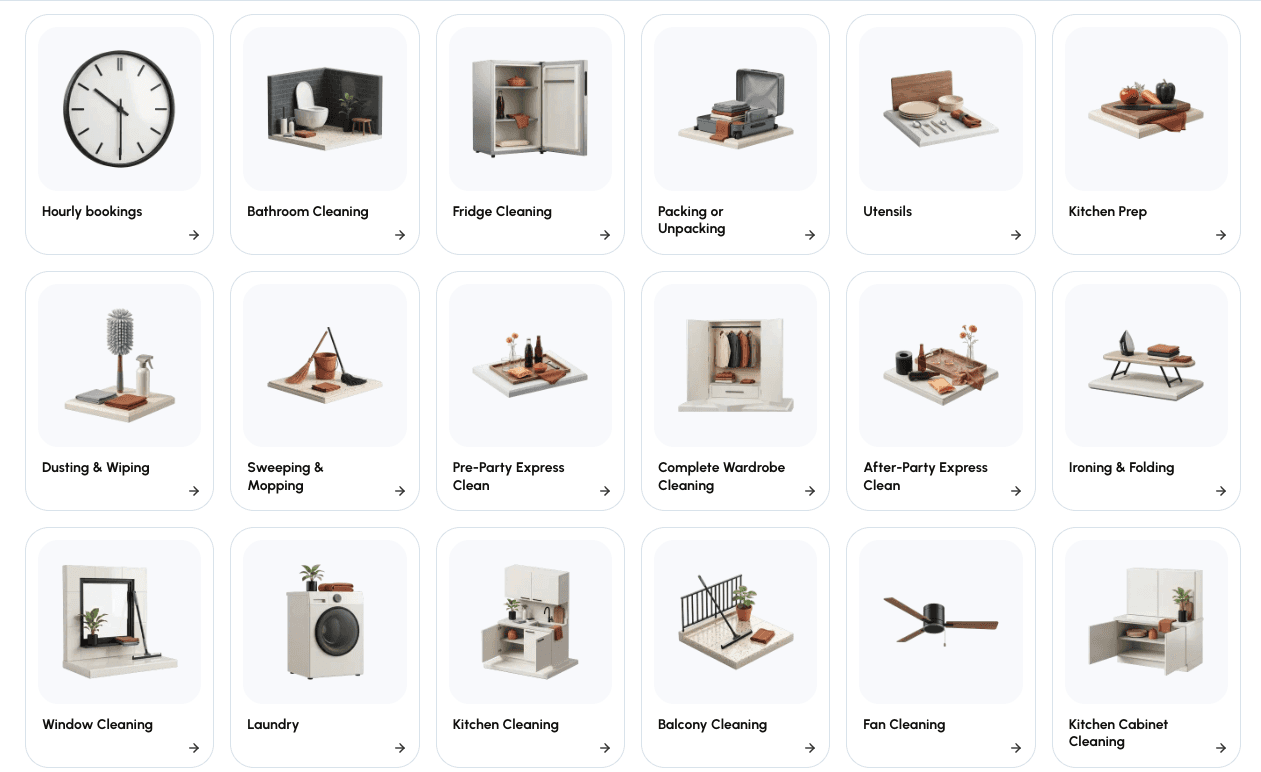
So the worker app went pictogram-first. Navigation by icon, color, and position instead of labels. The critical states a worker moves through in a shift, assigned, navigate, arrived, done, built to be told apart by shape and color alone, so the app works even for someone who can't read the word under the icon. Task confirmation went voice-first where it could: hear the job, confirm with a tap and a word. The design goal was a worker on her first day, nervous, possibly never having used an app like this, able to complete a job without reading a sentence.
Snabbit's flow: the customer shares a one-time password, and the task begins.
That OTP handshake is the category's standard trust mechanism, and we built our own version of it. It's a small thing that does enormous work: the lesson, the job, the clock, none of it starts until the worker is physically at the door and the customer hands over a code. It protects the customer (nobody starts a job that didn't happen), the worker (her time is logged from the real start), and the company (every ten-minute promise has a provable beginning). The trust model of the whole business, captured in four digits at a doorstep.
Tested in the hub, not the conference room
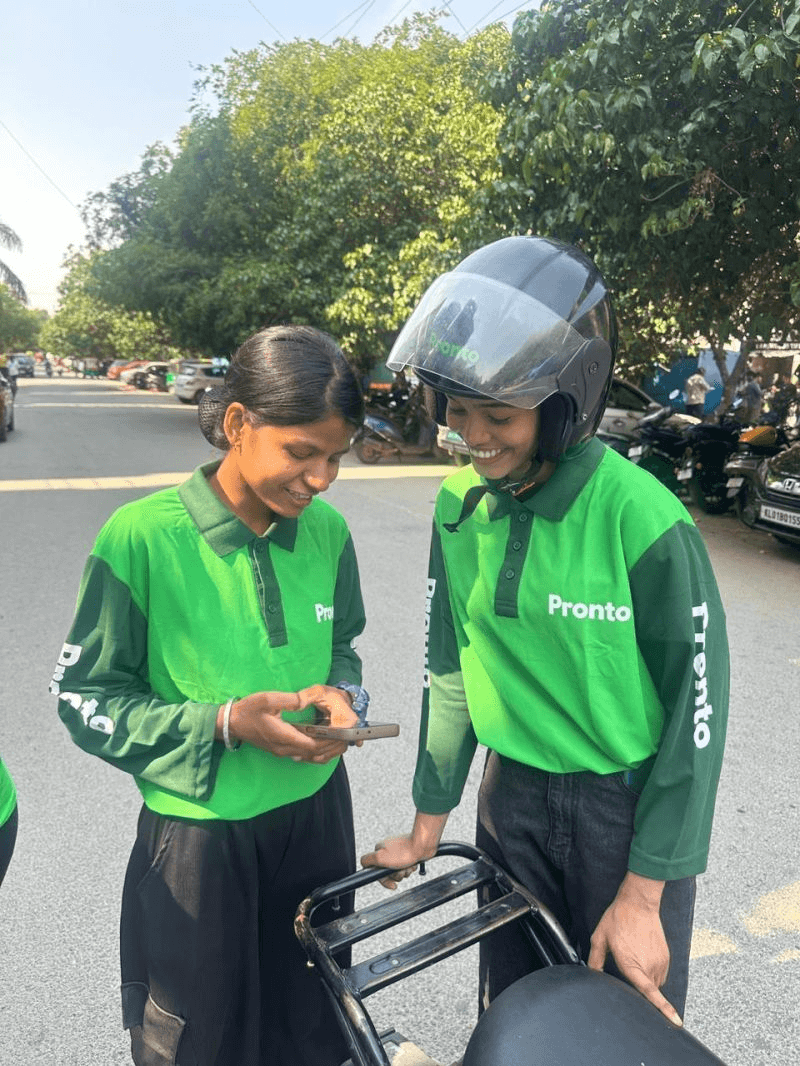
I didn't design this from a desk and hand it off. I helped set up hub operations and onboarded the first cohort of workers myself, which meant watching real workers, the actual women the business depended on, pick up the app for the first time.
That's where the assumptions died. Things I was sure were obvious weren't. An icon that read clearly to me read as something else to someone seeing it cold, in her third language, on day one. The fixes were small and the lesson was large: in this category the onboarding of a worker and the onboarding of a user are the same event, and no amount of clever interface survives contact with a first-time user until you've watched a first-time user touch it. The hub was the usability lab. What confused the first cohort got fixed in the next build and re-tested on the next group of women who walked in.
Why ten minutes is a design problem, not a speed problem
The instinct is to think the ten-minute promise is an operations problem: place workers close enough, dispatch fast enough, done. But every operational constraint in this model lands, eventually, on a screen someone has to use under pressure. That's where it became mine.
Three apps had to exist on day one, and they were really three views of a single ten-minute event:
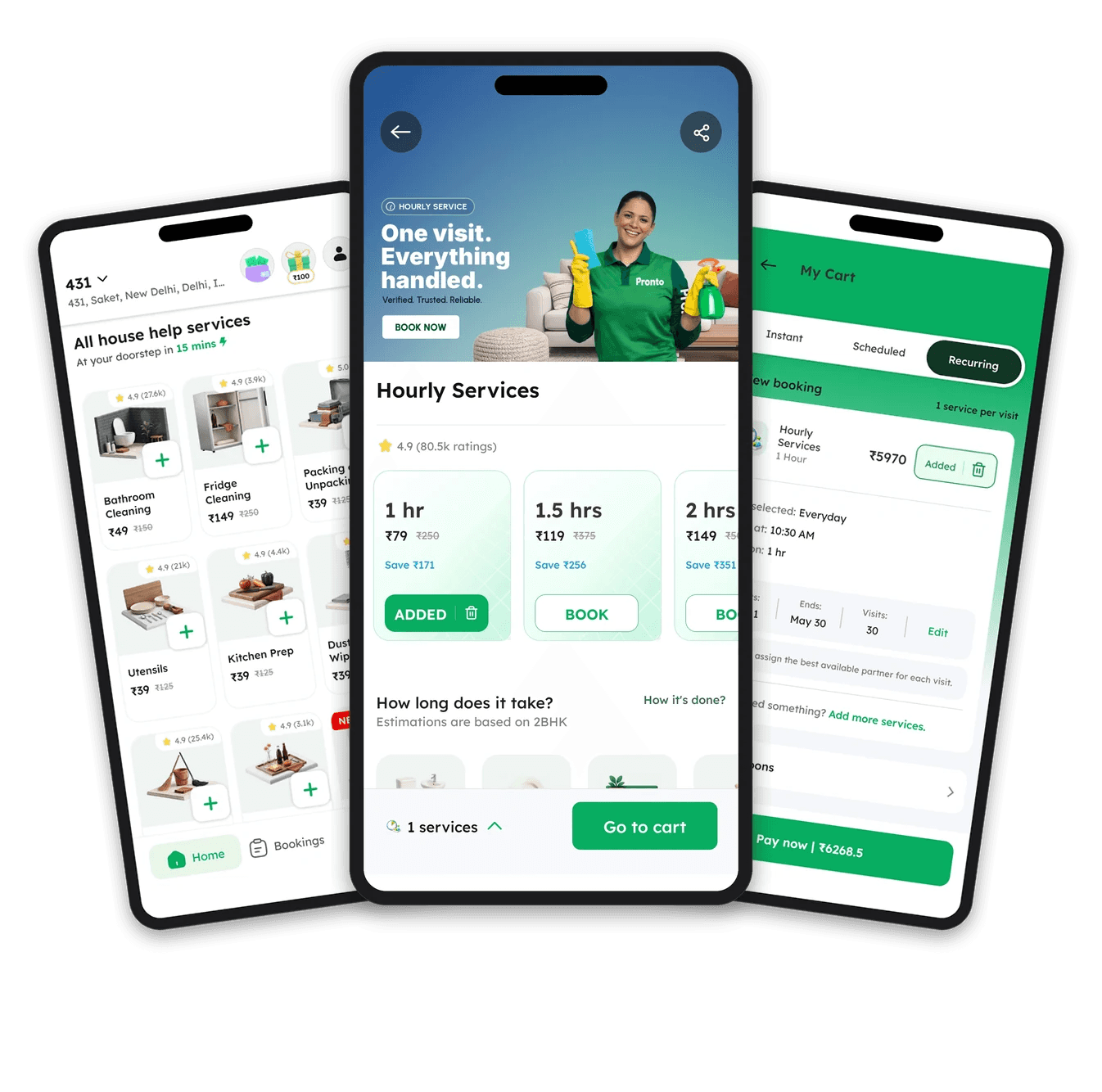
The customer app, where the promise is made.
The worker app, where the promise is kept, by a person who has to understand a job, accept it, navigate to it, and complete it, fast, every time.
The ops dashboard, where a human watches the whole fragile clockwork and catches it when it slips.
The category runs on density: cluster trained workers around dense residential pockets so someone is always ten minutes away. But at launch you don't have density. You have a handful of workers, two hubs, and a map full of gaps. Every design decision had to work in that thin, fragile early state, not the dense steady-state the model assumes. Designing for the day you launch, not the day you scale, is a different job, and it's the one most case studies in this space quietly skip.
The dashboard for the person watching the clock
The ops dashboard had one job: make the single order that's about to break the ten-minute promise impossible to miss among the many that are fine. So it surfaced exceptions, not totals. A hub running smoothly stays visually quiet. A job at risk of breaching the window gets loud. Shift assignment followed the hub manager's real rhythm, assign in bulk before the shift, adjust by exception during it, because at launch the manager is fighting fires, not reading reports.
What happened
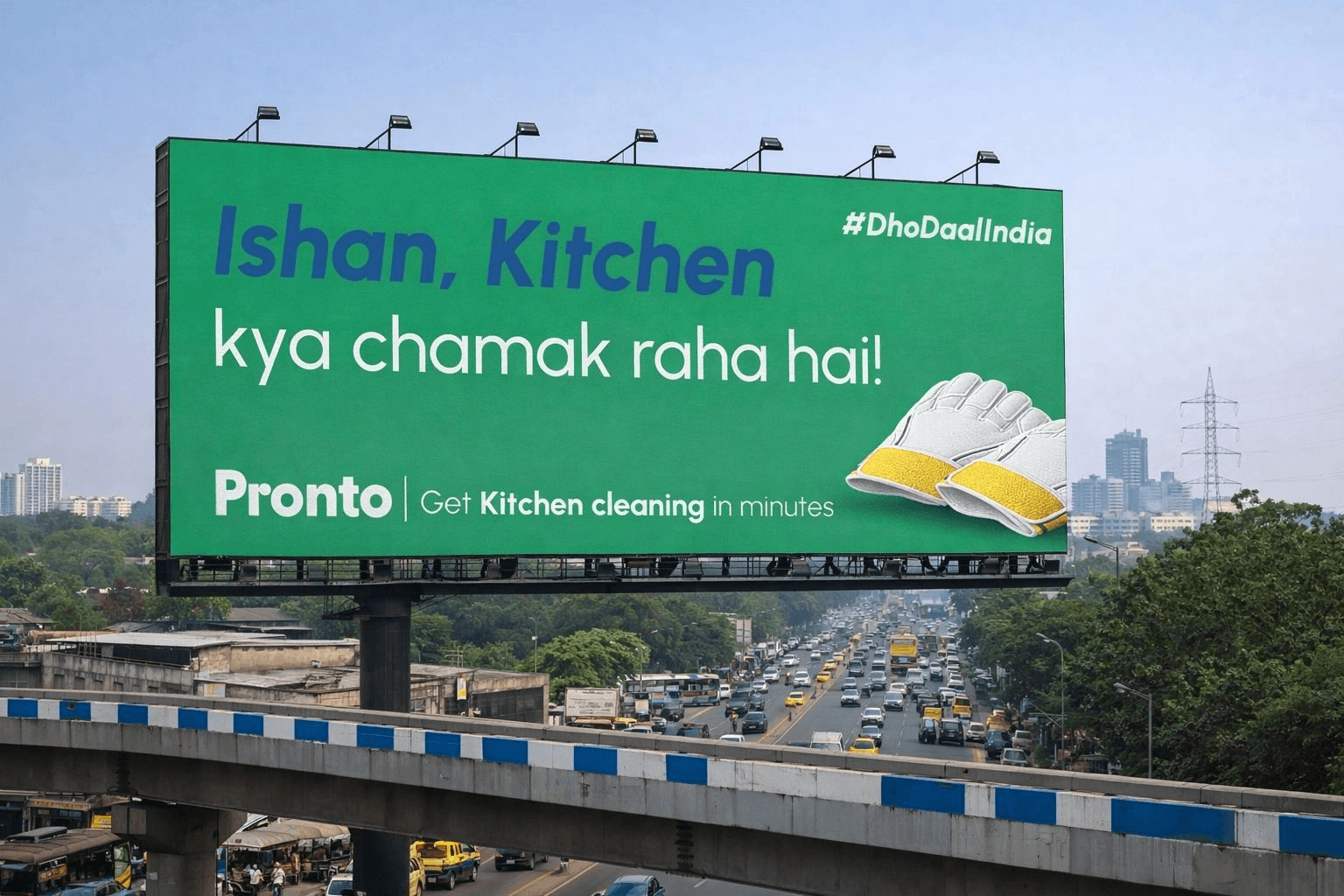
The MVP shipped, and it ran the launch wave: the first 300 to 400 daily orders across the first hubs in Gurugram. Small numbers, and that's the point, those were the orders that had to work before anyone could believe the bet. The product that carried that launch is the one I designed in those four weeks.
What the bet became is now a matter of record. Pronto went on to raise over $13M from Bain Capital Ventures and General Catalyst and reached a valuation around $200M, and the early model I helped launch has since grown into many times its first-week volume. The category I was designing into, instant home help, turned into one of India's most-watched consumer races, with hundreds of millions in capital flowing to the bet that, in the first two months, was still just a hypothesis on three screens.